
GB—— Servo Gripper
Large Gripping Force
Various stroke options
High Rigidity
Large Gripping Force
Various stroke options
High Rigidity
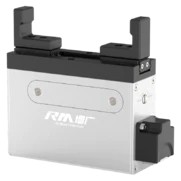
| Model | RM-GB-11-20-2-ITG | RM-GB-11-40-2-ITG | RM-GB-17-30-2-ITG | RM-GB-17-60-2-ITG | RM-GB-17-80-2-ITG | RM-GB-17-120-2-ITG |
|---|---|---|---|---|---|---|
| Size Code | 11 | 11 | 17 | 17 | 17 | 17 |
| Stroke (mm) | 20 | 40 | 30 | 60 | 80 | 120 |
| Type Code | 2 | 2 | 2 | 2 | 2 | 2 |
| Max.gripping Force (N) | 65 | 110 | 350 | 175 | 500 | 500 |
| Max.speed (mm/s) | 80 | 80 | 80 | 80 | 80 | 80 |
| Repeat Positioning Accuracy (mm) | ±0.05 | ±0.05 | ±0.02 | ±0.05 | ±0.02 | ±0.02 |
| Max.opening/closing Time (s) | 0.33/0.33 | 0.58/0.58 | 0.4/0.4 | 0.7/0.7 | 0.9/0.9 | 1.3/1.3 |
| Permissible Load Torque (N.m) | MR:8.0,MP:5.9, MY:5.9 | MR:8.0,MP:5.9, MY:5.9 | MR:58.5,MP:15.0, MY:25.5 | MR:58.5,MP:15.0, MY:25.5 | MR:60, MP:30, MY:40 | MR:60, MP:30, MY:40 |
| Power Failure Auto-Lock | Mechanical Self-Locking | Mechanical Self-Locking | / | Mechanical Self-Locking | / | / |
| Control Method - Bus | Modbus RTU/CANopen | Modbus RTU/CANopen | Modbus RTU/CANopen | Modbus RTU/CANopen | Modbus RTU/CANopen | Modbus RTU/CANopen |
| Control Method - Interface | I/O | I/O | I/O | I/O | I/O | I/O |
| I/O Interface | Input 3 Points(NPN) Output 3 Points(NPN) | Input 3 Points(NPN) Output 3 Points(NPN) | Input 2 Points(NPN) Output 3 Points(NPN) | Input 2 Points(NPN) Output 3 Points(NPN) | Input 2 Points(NPN) Output 3 Points(NPN) | Input 2 Points(NPN) Output 3 Points(NPN) |
| Rated Voltage (V) | DC24±10% | DC24±10% | DC24±10% | DC24±10% | DC24±10% | DC24±10% |
| Rated Current (A) | 2 | 2 | 4 | 4 | 4 | 4 |
| Weight (kg) | 0.8 | 1.1 | 2.1 | 2.3 | 3.5 | 4.0 |
| Usage Environment | 0~40°C, < 85%RH (Non-condensing) | 0~40°C, < 85%RH (Non-condensing) | 0~40°C, < 85%RH (Non-condensing) | 0~40°C, < 85%RH (Non-condensing) | 0~40°C, < 85%RH (Non-condensing) | 0~40°C, < 85%RH (Non-condensing) |
| Protection Class IP | IP40 | IP40 | IP40 | IP40 | IP40 | IP40 |
| Model | RM-GB-11-20-2 | RM-GB-11-40-2 | RM-GB-17-30-2 | RM-GB-17-60-2 | RM-GB-17-80-2 | RM-GB-17-120-2 |
|---|---|---|---|---|---|---|
| Size Code | 11 | 11 | 17 | 17 | 17 | 17 |
| Stroke (mm) | 20 | 40 | 30 | 60 | 80 | 120 |
| Type Code | 2 | 2 | 2 | 2 | 2 | 2 |
| Max.gripping Force (N) | 65 | 110 | 500 | 250 | 700 | 700 |
| Max.speed (mm/s) | 80 | 80 | 100 | 100 | 100 | 100 |
| Repeat Positioning Accuracy (mm) | ±0.05 | ±0.05 | ±0.02 | ±0.05 | ±0.02 | ±0.02 |
| Max.opening/closing Time (s) | 0.33/0.33 | 0.58/0.58 | 0.4/0.4 | 0.7/0.7 | 0.9/0.9 | 1.3/1.3 |
| Permissible Load Torque (N.m) | MR:8.0,MP:5.9, MY:5.9 | MR:8.0,MP:5.9, MY:5.9 | MR:58.5,MP:15.0, MY:25.5 | MR:58.5,MP:15.0, MY:25.5 | MR:60,MP:30, MY:40 | MR:60,MP:30, MY:40 |
| Power Failure Auto-Lock | Mechanical Self-Locking | Mechanical Self-Locking | Option Brake | Mechanical Self-Locking | Option Brake | Option Brake |
| Compatible Controllers | RM-C-20, RM-CEP-20, RM-CEM | RM-C-20, RM-CEP-20, RM-CEM | RM-C-40, RM-CEP-40, RM-CEM | RM-C-40, RM-CEP-40, RM-CEM | RM-C-40, RM-CEP-40, RM-CEM | RM-C-40, RM-CEP-40, RM-CEM |
| Supporting Bus Protocols | ModbusRTU, EtherCAT, ModbusTCP, PROFINET, EtherNet/IP, CC-LINK, CANopen | ModbusRTU, EtherCAT, ModbusTCP, PROFINET, EtherNet/IP, CC-LINK, CANopen | ModbusRTU, EtherCAT, ModbusTCP, PROFINET, EtherNet/IP, CC-LINK, CANopen | ModbusRTU, EtherCAT, ModbusTCP, PROFINET, EtherNet/IP, CC-LINK, CANopen | ModbusRTU, EtherCAT, ModbusTCP, PROFINET, EtherNet/IP, CC-LINK, CANopen | ModbusRTU, EtherCAT, ModbusTCP, PROFINET, EtherNet/IP, CC-LINK, CANopen |
| Rated Voltage (V) | DC24±10% | DC24±10% | DC24±10% | DC24±10% | DC24±10% | DC24±10% |
| Rated Current (A) | 2 | 2 | 4 | 4 | 4 | 4 |
| Weight (kg) | 0.8 | 1.1 | 2.1 | 2.3 | 3.5 | 4.0 |
| Usage Environment | 0~40°C, < 85%RH (Non-condensing) | 0~40°C, < 85%RH (Non-condensing) | 0~40°C, < 85%RH (Non-condensing) | 0~40°C, < 85%RH (Non-condensing) | 0~40°C, < 85%RH (Non-condensing) | 0~40°C, < 85%RH (Non-condensing) |
| Protection Class IP | IP40 | IP40 | IP40 | IP40 | IP40 | IP40 |


It can be rotated in four directions at 90 degrees along the fixed surface.


It can be rotated in four directions at 90 degrees along the fixed surface.


It can be rotated in four directions at 90 degrees along the fixed surface.


It can be rotated in four directions at 90 degrees along the fixed surface.


It can be rotated in four directions at 90 degrees along the fixed surface.


It can be rotated in four directions at 90 degrees along the fixed surface.


It can be rotated in four directions at 90 degrees along the fixed surface.


It can be rotated in four directions at 90 degrees along the fixed surface.


Note: Users can choose the appropriate wiring position and method based on the actual working conditions. If you have any questions, please consult your local sales engineer.